Menu
Principal Office, Houston Texas Remote Services, Texas and Florida
(by appointment only)
713.568.8600
(by appointment only)
713.568.8600 | 904.425.9046


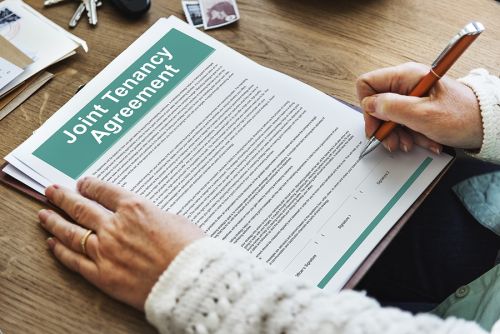
Do you own your home, other property, or a financial account with someone else, such as a spouse or an adult child? If so, you might be surprised to learn that a common way of owning property could cause problems for your loved ones in the future. Joint ownership can avoid probate, but it can also mean that your children could be unintentionally disinherited.
While there are several forms of joint ownership, the one most people use is called joint tenants with right of survivorship. When you and another person own an account or property as joint tenants with right of survivorship, it means that, when one owner passes away, the surviving owner automatically takes over full ownership. If there are more than two joint owners, the deceased owner’s interest is divided equally among the surviving owners. All this happens instantly under the law, no matter what your will or trust might say.
 Joint Ownership Postpones Probate
Many people think that owning property jointly allows them to avoid probate completely. Probate is the court process of transferring a person’s solely owned accounts and property that has no beneficiaries when the person dies to their heirs-at-law. While joint property ownership avoids the probate process when the first owner passes away, it does not guarantee that probate will be avoided forever. When the last surviving owner dies, probate will be required unless that individual added a new joint owner, named a beneficiary, or placed the account in a trust before they passed away. And if all joint owners die simultaneously, probate may be required immediately.
This situation is one of the most common and heartbreaking surprises for families. Your will or trust has no say over accounts and property you own jointly with someone in a way that provides for survivorship rights. Your share of accounts and property that you own jointly with right of survivorship will automatically go to the surviving owner or owners. The following are a couple of possible scenarios:
Here is an example:
Robert inherited his family’s vacation home upon the death of his father. Robert decided to add his wife, Joan, to the title of the home as a joint owner with rights of survivorship to avoid probate. After Robert died, Joan became the sole owner of Robert’s family vacation home. She remarried a few years later and added her new spouse’s name to the home’s title as a joint owner, also with the right of survivorship. When Joan died, her children were shocked to learn that the new husband would become the sole owner of the property, even though their father had always promised that it would stay in the family and be left to them.
Avoid leaving your family’s future to chance. A simple review of how you own your accounts and property can help ensure that your estate plan works the way you want. We can help you understand your options and protect your loved ones. To avoid both inconvenience and tragedy, call our office immediately to set up an appointment and have the ownership of your accounts and property reviewed.
Joint ownership may seem simple, but as you can see, it can put your accounts and property—and your loved ones’ inheritance—at risk. The good news is that these problems are preventable. We are here to help you understand your options and find the right solutions for yourself and your loved ones, give us a call.

Principal Office, Houston Texas Remote Services, Texas and Florida
(by appointment only)
713.568.8600
(by appointment only)
713.568.8600 | 904.425.9046
© 2025 McCreary Law Office, PLLC