Menu
Principal Office, Houston Texas Remote Services, Texas and Florida
(by appointment only)
713.568.8600
(by appointment only)
713.568.8600 | 904.425.9046


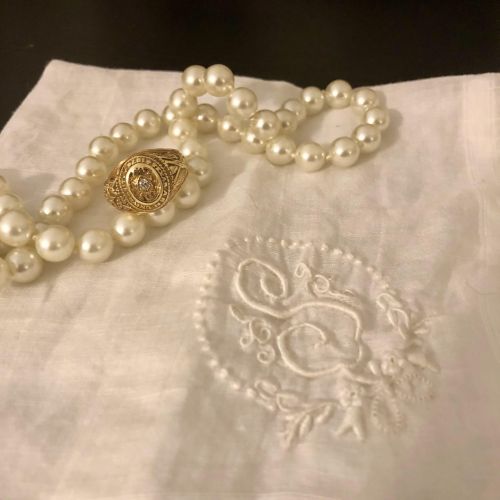
Personal items accumulated over our lifetimes may be left in estate planning limbo when we pass away. You may have kept many personal effects and everyday items more for sentimental reasons than for financial value, such as your clothing, jewelry, books, quilts, collectibles, and religious items.
Each item we leave behind tells part of the story of who we were and what we valued, a subtle sign of meaning that, after we pass, serves as a powerful reminder of person, place, and purpose.
While your estate plan may describe in detail who will receive big-ticket items, your loved ones may argue over small nostalgic items that you unintentionally omitted. To prevent family strife and forestall bickering among your loved ones, you also need to think in a big-picture way about the little things in your estate.
The fate of your home and vacation property is likely to be outlined in your estate plan. You have probably selected beneficiaries for your retirement account and life insurance policies; chosen a future owner for your valuable collection of first-edition books; divided up your business interests; and planned for your digital assets.
Your estate plan checks all the major boxes. But is there a check mark next to those sentimental items?
Many people assume—wrongly, it turns out—that money is the top issue that triggers fights among heirs. In fact, personal items are five times more likely than money to create family conflict, according to a study from Allianz Life Insurance that examined inheritance and legacy issues.[1]
Families may go to court over something as seemingly insignificant as a handwritten recipe book or a piece of art.[2] In some cases, people end up inheriting enough financial assets to replace the disputed sentimental item many times over, yet spend exorbitant sums fighting over the original item for sentimental reasons.
In 2014, comedian and actor Robin Williams left behind an estate valued at around $100 million.[3] Following his death, his three children and widow entered a bitter feud over Williams’ personal items, including family photographs, clothing, and a bicycle.[4]
On their own, these items may not have much financial value, yet small personal belongings can still cause the most contention because they often represent the greatest emotional tie to the deceased.
Estate planning attorneys can cite example after example of such conflicts happening with their clients, regardless of their wealth. With emotions running high after a loved one’s death, grieving loved ones may be willing to pay any price, financial or otherwise, to obtain sentimental items.

For anyone caught up in a family dispute (or attempting to avoid one) about the fate of a favorite wristwatch, sewing kit, or piece of artwork, it is okay to pause before distributing personal items.
As long as there is no rush to clear out the house for sale or for someone else to move in, items can generally remain where they are. Think of it as a museum with everything left as it was at the time of your loved one’s passing.
Depending on the instructions left in the estate plan, one option is for loved ones to walk around the “museum” and, as they reminisce, identify items they would like to keep and box everything up. If all the heirs are unable to meet in person for this exercise due to distance or scheduling constraints, the executor could host a virtual meeting to bring everyone together and keep them on the same page.
This process can be a conversation starter, but ideally, the conversation starts during the owner’s lifetime, when heads are cooler and emotions are less intense.
Start with a simple direct question for your loved ones: Is there anything of mine that you want?
There may also be items of special importance to you that you want passed down in particular ways. Ensure that these things are also part of the conversation.
The person(s) responsible for winding up the decedent’s affairs will create an inventory of most assets, but there is no reason it cannot be done during the owner’s life.
Inventorying could be part of “Swedish death cleaning”[5] or a similar predeath decluttering ritual. Everything that does not get thrown out or donated while you are alive can be added to the list, simplifying the inventory for heirs and removing some of the guesswork.
In fact, the best time to create an inventory may be now, while you are alive. Waiting until later means that the executor or personal representative and family members will be responsible for inventorying, a process that could be unclear and contentious.
After your death, the inventory can be updated to reflect the distribution plan for specific assets. For example, items could be designated in a spreadsheet as “donate,” “throw away,” or “Aunt Cathy claimed.” The real harm could come from what does not make it onto the list and falls into a gray area.
Having one person oversee inventorying and distribution is another way to simplify what could otherwise be a complex, messy, conflict-prone situation—and still could be, despite efforts to avoid it.
Usually, the executor is responsible for the inventory and distribution of assets, but other solutions are possible. Depending on family dynamics, a separate “master of ceremonies” could be a better fit for this role. Consider somebody with a level head, a sense of fairness, and a degree of separation from any family rifts.
Once again, this process does not have to wait until after your death. It could be you (the original owner) who oversees a creative solution to the keepsake conundrum.
It may take months or years for your loved ones to get over the immediate emotional sting of your passing. But there are ways to make the division process a more positive experience for all involved—yourself included. Consider implementing strategies to divide assets during your lifetime so you can witness the recipients’ enjoyment, or else specify procedures for dividing sentimental assets after your death.

Conflicts over items from the residuary, or residual, estate typically arise due to a lack of planning. “Residual” is an appropriate term here because it can create a sticky, hard-to-remove situation when beneficiaries are not clearly linked to specific items.
An inventory, no matter how thorough, or a game, no matter how fun, may not carry the legal weight of a formal personal property memorandum. And that can cause every other effort to distribute personal items, no matter how thoughtful, to fall short.
A personal property memorandum is a simple document that works alongside your will and lets you specify who should receive certain personal belongings, but it is subject to different rules in different states. In many states, when your will references it, the memorandum is usually recognized as a legally binding guide. Because it is separate from the will, you can update it as often as needed without revising your entire estate plan.
This memorandum works hand in hand with your will’s residuary clause, which directs where everything else goes after specific gifts have been handled.
If no memorandum exists, the residuary clause controls the distribution of all personal effects, including sentimental items. In some families, that works fine; in others, it leaves too much up to chance.
By creating a personal property memorandum or by being intentional about how your residuary clause is drafted, you can give your loved ones unambiguous written guidance governing sentimental items.
Memoranda and similar clauses, if added to an estate plan, should clearly delineate specific valuable items, especially in blended families or already conflicted families, to avoid costly disputes over sentimental or valuable personal property.
It is not always obvious which items hold the most personal importance to someone. The cheapest tchotchke could send us—or a loved one—down memory lane.
It is your stuff and ultimately your responsibility to decide its fate. That responsibility can be handed off and delayed, possibly at great cost to your family and legacy. Take steps now to save your heirs heartache later. Start inventorying and planning today. Protect what matters most by calling our office today.

Principal Office, Houston Texas Remote Services, Texas and Florida
(by appointment only)
713.568.8600
(by appointment only)
713.568.8600 | 904.425.9046
© 2026 McCreary Law Office, PLLC